

Body Mass Index, commonly known as BMI, is a simple measurement used to compare a person’s body weight with their height. It is widely used as a general screening tool for adults and can help provide context when looking at body weight.
BMI does not directly measure body fat, muscle mass, or overall health. Instead, it provides a numerical value based on height and weight. For this reason, BMI is most useful when considered alongside other factors such as body composition, activity level, lifestyle, and individual health circumstances.
What Is BMI?
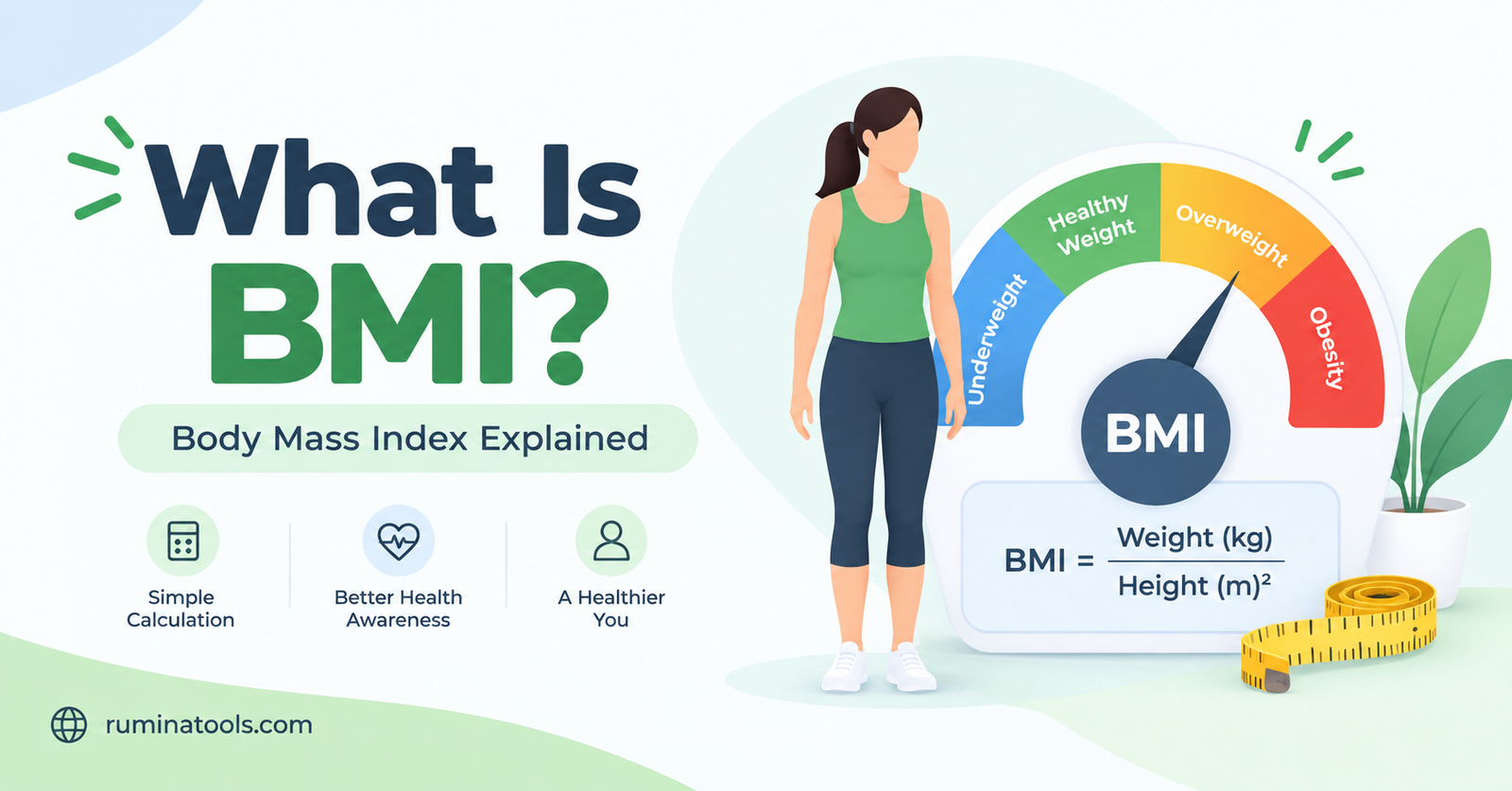
BMI stands for Body Mass Index. It is calculated using a person’s weight and height. The standard adult BMI formula is:
BMI = weight in kilograms ÷ height in meters²
For example, if someone weighs 70 kilograms and is 1.75 meters tall, their BMI is calculated by dividing 70 by 1.75 squared.
Our BMI Calculator can perform this calculation automatically after you enter your height and weight.
How Is BMI Calculated?
BMI can be calculated using either metric or imperial measurements. With the metric system, weight is entered in kilograms and height in meters.
For imperial measurements, weight is generally entered in pounds and height in inches. The calculation uses a conversion factor to produce the BMI value.
Using a calculator can make the process easier and reduce the chance of calculation errors.
What Do BMI Ranges Mean?
For adults, BMI values are commonly grouped into general categories. These categories are used as screening ranges rather than complete health diagnoses.
- Below 18.5: Underweight range
- 18.5 to 24.9: Healthy weight range
- 25.0 to 29.9: Overweight range
- 30.0 and above: Obesity range
These ranges provide general context, but they do not tell the complete story about an individual’s health.
Why BMI Does Not Tell the Whole Story
BMI is based only on height and weight. It does not distinguish between muscle, fat, bone, or other components of body weight.
For example, someone who has a relatively high amount of muscle may have a higher BMI even though they have a lower body-fat percentage. Similarly, BMI may not fully represent differences in body composition between individuals.
This is why BMI should generally be viewed as one measurement rather than a complete assessment of health.
BMI and Body Fat Percentage
Body fat percentage is another measurement that can provide additional information about body composition. Unlike BMI, body fat percentage attempts to estimate how much of a person’s body weight comes from fat.
Our Body Fat Calculator provides an estimate using body measurements. Combining different measurements can provide broader context than relying on BMI alone.
BMI and Daily Calorie Needs
BMI can also be considered alongside calorie and energy-related measurements. Your daily calorie needs depend on several factors, including age, sex, body size, and activity level.
If you want to understand your estimated energy requirements, you can use the Calorie Calculator.
You can also learn about your estimated basal metabolic rate with the BMR Calculator and estimated total daily energy expenditure with the TDEE Calculator.
Calculate Your BMI
Want to know your BMI? Enter your height and weight into the Ruminatools BMI Calculator to get your estimated BMI and its general category.
Frequently Asked Questions About BMI
Is BMI accurate for everyone?
BMI is a useful general screening measurement, but it does not account for every difference in body composition. Factors such as muscle mass and body-fat distribution can affect how meaningful a BMI value is for an individual.
Is BMI used for children?
BMI interpretation for children and teenagers is different from adult BMI interpretation. Age and sex are important when assessing BMI in younger people, so adult BMI categories should not simply be applied to children.
Can BMI tell me how much body fat I have?
No. BMI does not directly measure body fat. A body-fat estimate uses different measurements and methods.
Should I use BMI as my only health measurement?
No. BMI can provide useful general context, but it should be considered together with other relevant information such as body composition, lifestyle, physical activity, and individual health circumstances.
Explore More Ruminatools Calculators
Ruminatools provides several free health and nutrition calculators designed to help you understand different aspects of body measurements and energy needs.
- BMI Calculator
- BMR Calculator
- TDEE Calculator
- Calorie Calculator
- Macro Calculator
- Protein Ca