

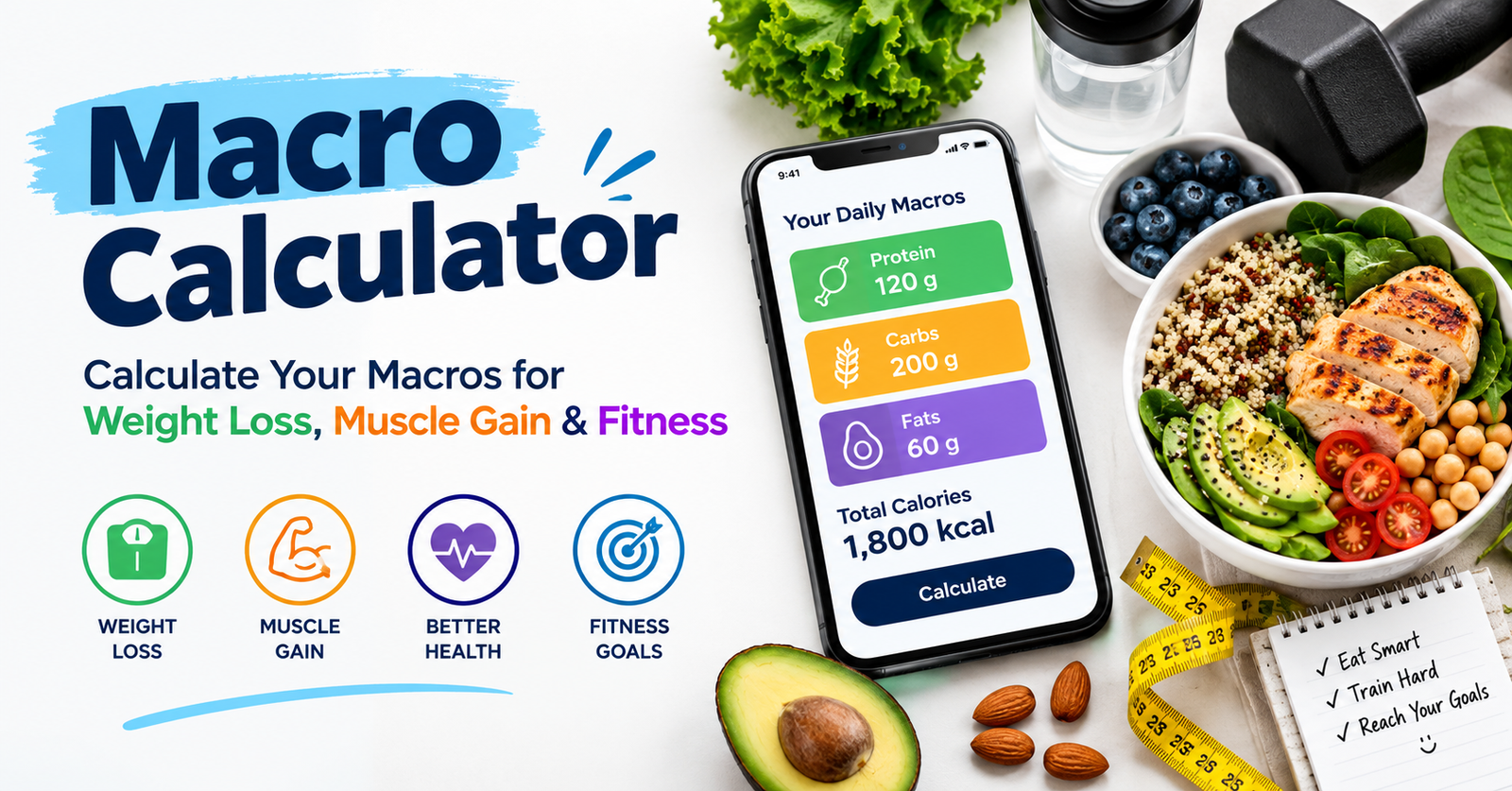
A macro calculator can help you estimate how much protein, carbohydrates, and fat you may need each day based on your body, activity level, and fitness goals. Unlike simply counting calories, tracking macronutrients gives you a better picture of where your daily calories are coming from.
Whether your goal is losing body fat, building muscle, improving athletic performance, or maintaining your current weight, setting appropriate macros can make your nutrition plan more structured.
Your ideal macro targets are personal. They depend on factors such as age, sex, height, weight, activity level, training frequency, and your specific goal. A calculator provides a useful starting point, but your results and progress can help you determine whether adjustments are needed.
What Are Macros?
“Macros” is short for macronutrients. The three primary macronutrients are protein, carbohydrates, and fat.
Each provides energy and plays a different role in the body. Protein supports muscle maintenance and repair, carbohydrates provide an important source of energy, and dietary fat supports normal body functions and helps with the absorption of certain vitamins.
Understanding macros can make it easier to build meals that fit both your calorie requirements and nutritional goals.
Protein, Carbohydrates, and Fats Explained
Protein is made from amino acids and is important for maintaining and repairing body tissues. It is particularly important for people who perform resistance training or other demanding physical activities.
Common protein-rich foods include:
- Chicken and turkey
- Fish and seafood
- Eggs
- Greek yogurt
- Cottage cheese
- Lean beef
- Beans and lentils
- Tofu and other soy foods
Carbohydrates are a major source of energy. They are found in foods such as oats, rice, potatoes, fruits, vegetables, beans, and whole grains.
Dietary fat is also essential. Sources include nuts, seeds, avocado, olive oil, fatty fish, and other foods containing unsaturated fats.
A healthy diet does not require eliminating any of these macronutrients. The appropriate balance depends on your individual needs and preferences.
Why Each Macronutrient Matters for Your Body
Each macro has a distinct role.
Protein helps support muscle tissue and contributes to satiety. Carbohydrates can provide readily available energy for daily activity and exercise. Fat supports cell function, hormone production, and the absorption of fat-soluble vitamins.
For this reason, a good nutrition plan should focus on both total calorie intake and adequate macronutrient intake.
The goal is not necessarily to find a perfect ratio. Instead, your macro targets should support your health, activity, food preferences, and fitness objective.
How to Calculate Your Macros
Calculating your macros usually starts with estimating your total daily calorie needs. Once you have a reasonable calorie target, those calories can be distributed between protein, carbohydrates, and fat.
A macro calculator can simplify this process by using your personal information and goal to generate an estimated target.
Calculate Your Daily Calorie Needs First
Before setting your macros, you need an estimate of your daily energy requirements.
Your calorie needs are influenced by:
- Age
- Sex
- Height
- Weight
- Daily activity
- Exercise frequency
- Fitness goal
A calorie calculator may estimate your maintenance calories, which represent the approximate amount of energy your body uses each day.
From there, your calorie target can be adjusted depending on whether you want to lose weight, maintain your weight, or gain muscle.
Determine Your Protein, Carb, and Fat Targets
Once you have a calorie target, you can distribute your calories between protein, carbohydrates, and fat.
A commonly used starting point is to prioritize adequate protein, establish a suitable fat intake, and use the remaining calories for carbohydrates.
The exact percentages do not need to be identical for everyone.
For example, someone training for endurance may prefer more carbohydrates, while someone following a lower-carbohydrate eating pattern may allocate more calories to fat.
The important thing is that your overall intake supports your goal and provides adequate nutrition.
Why Count Macros Instead of Only Calories?
Counting calories can tell you how much energy you consume, but it does not tell you how that energy is distributed between protein, carbohydrates, and fat.
Macro tracking adds another layer of information that can be useful for people with specific fitness or nutrition goals.
Macros vs. Calories: What’s the Difference?
Calories measure energy.
Macros describe the major nutrients that provide that energy.
Protein and carbohydrates provide approximately 4 calories per gram, while dietary fat provides approximately 9 calories per gram.
For example, two meals could contain a similar number of calories but have very different amounts of protein, carbohydrates, and fat.
This difference can matter when you’re trying to support muscle growth, manage hunger, fuel exercise, or structure your diet around a particular fitness goal.
How Macro Tracking Can Improve Your Diet
Tracking macros can help you identify whether your diet is providing enough protein, carbohydrates, and fat.
For example, someone trying to build muscle may discover that they consistently consume plenty of calories but not enough protein. Someone training for endurance activities may realize that their carbohydrate intake is lower than expected.
Macro tracking can also improve portion awareness and make meal planning more predictable.
However, you do not necessarily need to track every gram forever. Some people use detailed tracking temporarily to learn portion sizes and develop better eating habits.
How to Calculate Macros for Fat Loss
When your goal is fat loss, total calorie intake remains an important factor. Macro distribution can then help you structure those calories in a way that supports satiety, training, and muscle retention.
Set Your Calories for a Sustainable Fat-Loss Goal
A sustainable fat-loss plan generally starts with a manageable calorie deficit rather than an extreme reduction in food intake.
Your starting calorie target can be estimated from your maintenance needs. The size of the deficit should take into account your current body size, activity level, nutritional needs, and overall health.
A successful fat-loss diet should also contain plenty of nutrient-dense foods.
Good options include:
- Lean meats and fish
- Eggs
- Greek yogurt
- Vegetables
- Fruits
- Whole grains
- Beans and legumes
- Nuts and seeds
A sustainable approach is generally easier to maintain than aggressive restriction.
Adjust Protein, Carbs, and Fats for Weight Loss
Protein deserves particular attention during a fat-loss phase because maintaining adequate protein intake can support lean muscle when combined with resistance training.
After establishing protein and an appropriate fat intake, remaining calories can be allocated to carbohydrates according to your preferences and activity level.
There is no single macro ratio that guarantees weight loss.
Your plan should be flexible enough to fit your lifestyle while keeping your overall calorie intake aligned with your goal.
Tracking Macros: A Guide for Beginners
Macro tracking can seem complicated at first, but the process becomes easier once you understand food labels, portions, and serving sizes.
You do not need to make every meal perfect. Consistency over time is more useful than trying to hit every macro to the exact gram.
How to Track Your Daily Macros
Start by establishing your daily targets with a macro calculator.
Then record the foods and drinks you consume using a nutrition app, food diary, or nutrition labels.
Pay particular attention to serving sizes because the amount you actually eat may differ from the serving listed on the package.
Meal preparation can also make tracking easier. Preparing several meals in advance allows you to estimate their nutritional content before eating them.
When tracking, consider:
- Main meals
- Snacks
- Drinks
- Cooking oils
- Sauces
- Dressings
- Condiments
- Portion sizes
Over time, you may become more familiar with the macro content of your regular foods.
Common Macro Tracking Mistakes to Avoid
Beginners often make a few common mistakes.
One is focusing too heavily on exact numbers while ignoring overall food quality. Another is forgetting calories from cooking oils, sauces, beverages, and small snacks.
It is also common to change targets too frequently. Your body needs time to respond to a nutrition plan, so daily fluctuations should not automatically lead to major changes.
Finally, remember that estimated macro targets are not a substitute for professional nutrition advice when you have specific medical or dietary requirements.
Bodybuilding Macro Calculator: Calculate Macros for Muscle Growth
A bodybuilding macro calculator can provide a starting point for people who want to support muscle growth through resistance training and structured nutrition.
Building muscle requires more than simply eating extra calories. Training quality, adequate protein, recovery, and overall diet composition all matter.
How to Set Macros for Building Muscle
People focused on muscle growth often need enough calories to support training and recovery.
A small calorie surplus may be appropriate for some individuals, although the ideal approach varies according to training experience and body composition.
Protein should be distributed across meals throughout the day, while carbohydrates can provide useful fuel for resistance training.
Healthy fats should also remain part of the diet rather than being unnecessarily eliminated.
A practical muscle-building meal plan might include:
- A protein source at each meal
- Carbohydrate-rich foods around training
- Fruits and vegetables
- Healthy sources of dietary fat
- Adequate fluids
- Nutrient-dense whole foods
Protein and Carbohydrate Needs for Strength Training
Protein is especially important for resistance-training athletes because muscles need amino acids for repair and adaptation.
Carbohydrates can help provide energy for demanding workouts and replenish glycogen stores.
Your individual needs will depend on factors such as training volume, exercise intensity, body size, and overall calorie intake.
Rather than following an extreme bodybuilding diet, focus on a consistent eating pattern that supports your training and recovery.
Macro Calculator for Successful Weight Loss
A macro calculator can make a weight-loss plan easier to organize by giving you a calorie and macronutrient starting point.
The objective is not to create a complicated diet. Instead, the calculator can help turn a general goal into measurable daily targets.
How to Set Your Macros for a Calorie Deficit
First, estimate your maintenance calories. Then establish a reasonable calorie target below maintenance if fat loss is your goal.
Protein can be prioritized to help support lean tissue, while carbohydrates and fats can be adjusted based on your preferences and activity level.
Your macro targets should also leave enough room for vegetables, fruits, whole grains, and other nutrient-dense foods.
If you feel excessively hungry, fatigued, or unable to perform normally during workouts, your plan may need to be reassessed.
How to Adjust Your Macros as You Progress
Your initial macro calculation is only a starting point.
As your body weight, activity level, or training routine changes, your energy requirements may change as well.
Instead of reacting to every daily weight fluctuation, evaluate your progress over several weeks.
You may consider adjusting your calorie and macro targets when:
- Your goal changes
- Your body weight changes substantially
- Your activity level changes
- Your training volume increases or decreases
- Your progress consistently stops
Small, gradual adjustments are generally easier to evaluate than frequent major changes.
How to Set Up Your Macros to Cut Down for the Summer
A summer cutting phase generally means reducing body fat while trying to maintain as much lean muscle as possible.
The most effective approach is not necessarily the most restrictive one. A structured diet combined with resistance training and regular activity can provide a more sustainable strategy.
Creating a Practical Cutting Macro Plan
Start by estimating your maintenance calories and establishing a manageable calorie deficit.
Then set a suitable protein intake and distribute the remaining calories between carbohydrates and fats according to your preferences and training needs.
Build most meals around nutrient-dense foods such as:
- Lean protein
- Vegetables
- Fresh fruit
- Whole grains
- Potatoes
- Legumes
- Nuts and seeds
- Healthy oils
Planning meals in advance can also reduce the temptation to rely heavily on highly processed convenience foods.
How to Maintain Muscle While Cutting
Maintaining muscle during a cut requires more than simply eating less.
Resistance training should remain part of your routine, and adequate protein can help support lean tissue. Getting enough sleep and allowing appropriate recovery are also important.
Avoid unnecessarily aggressive calorie restriction because it can make training and adherence more difficult.
A successful cutting phase should focus on gradually improving body composition while maintaining strength and performance as much as possible.
How a Macro Calculator Can Help You Reach Your Fitness Goals
A macro calculator gives you a structured starting point for planning your nutrition.
Instead of guessing how much protein, carbohydrates, and fat to eat, you can use your personal information and goal to generate estimated daily targets.
Calculate Your Personalized Macro Targets
Your personalized macro calculation may consider:
- Age
- Sex
- Height
- Weight
- Activity level
- Exercise frequency
- Primary goal
Your target may look different depending on whether you want to lose fat, maintain your weight, build muscle, or support athletic performance.
The calculator should be viewed as a starting estimate rather than an exact measurement of your body’s nutritional requirements.
When Should You Adjust Your Macros?
You may need to review your macros when your circumstances change.
For example, a significant change in body weight can affect your estimated energy needs. Increasing your training volume may also change how much energy and carbohydrate you need.
Other reasons to reassess include changing from a fat-loss phase to maintenance, beginning a muscle-building phase, or changing your overall activity level.
Give your plan enough time to evaluate meaningful trends before making frequent adjustments.
Frequently Asked Questions
How do I know if my macros are right for me?
Your macro targets should reflect your calorie needs, body size, activity level, and goal. A macro calculator provides a starting estimate that can be adjusted as your results change.
How much protein should I eat a day to build muscle?
For people who regularly train, a commonly used range is around 1.6–2.2 grams of protein per kilogram of body weight per day, depending on goals and circumstances.
Is counting macros better than counting calories?
Counting calories helps manage total energy intake, while tracking macros shows how those calories are distributed between protein, carbohydrates, and fat. Using both can be useful for specific fitness goals.
Can I lose weight without tracking my macros?
Yes. Macro tracking is optional; weight loss primarily depends on maintaining an appropriate calorie deficit over time. Tracking macros can simply make it easier for some people to structure their diet.
Do I need to hit my macros exactly every day?
No. Your targets are estimates, so being reasonably close is usually more practical than trying to hit every number perfectly. Consistency over time matters more than daily perfection.
Conclusion
A Macro Calculator gives you a practical starting point for understanding how much protein, carbohydrates, and fat you may need each day based on your body, activity level, calorie needs, and fitness goal. Since macro requirements vary from person to person, there is no single ratio that works for everyone.
Whether your goal is weight loss, muscle gain, bodybuilding, or maintaining your current weight, use your calculated macros as a guide rather than a strict rule. Track your intake, monitor your progress, and make gradual adjustments when your results or goals change.
The key takeaway: calculate your daily calories first, set realistic macro targets, focus on nutritious foods, and stay consistent. A macro calculator can make this process easier by turning your fitness goal into simple daily protein, carb, and fat targets.