

Introduction
Protein plays an essential role in building and maintaining muscle, repairing tissues, and supporting overall health. However, your daily protein needs can vary based on factors such as body weight, age, activity level, and fitness goals.
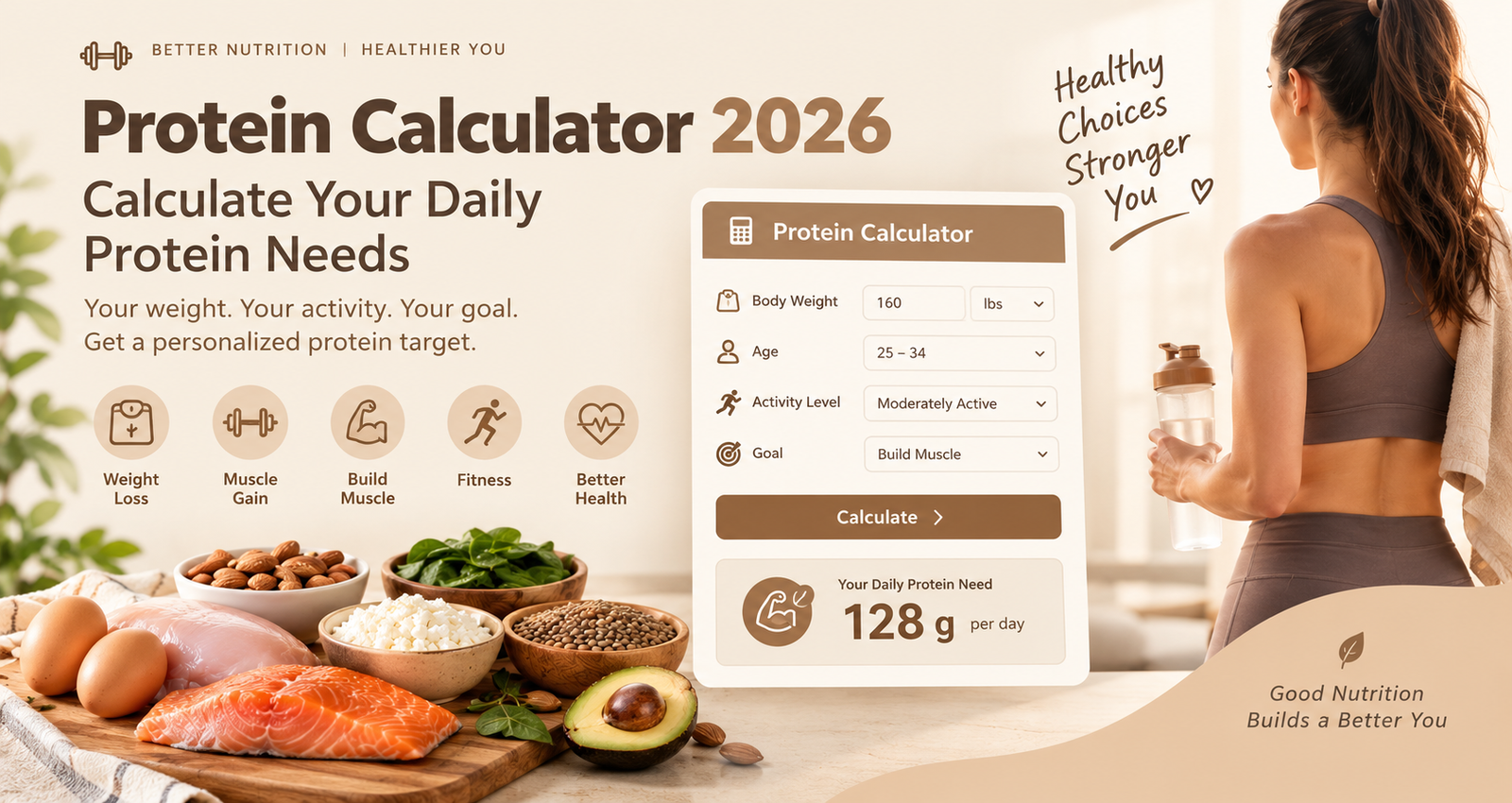
Our Protein Calculator 2026 helps you estimate your daily protein needs based on your individual information. Whether your goal is weight loss, weight gain, muscle building, or general fitness, this guide explains how much protein you may need and how to calculate your target.
Use the calculator to get your estimated daily protein intake, then explore the guide to understand protein needs by body weight, activity level, and fitness goal.
Protein Calculator: How Much Protein Do I Need?
How a Protein Calculator Works
Explain exactly how the calculator estimates daily protein requirements from inputs such as body weight, age, activity level and fitness goal. Make the calculator the primary tool rather than burying it below several paragraphs.
Explain the difference between a basic protein recommendation and a personalized estimate. A healthy sedentary adult, an active person, someone trying to lose weight, and someone focused on muscle growth can have different protein targets.
Also explain the two common measurement systems:
- Protein per day in grams
- Protein relative to body weight in grams per kilogram (g/kg) or grams per pound (g/lb)
This section should naturally target semantic terms such as daily protein intake, protein requirements, protein needs calculator, recommended protein intake, grams of protein per day, and protein per body weight.
Factors That Affect Your Protein Requirements
Explain why there is no single protein number that applies equally to everyone. Discuss:
- Body weight
- Age
- Activity level
- Resistance training
- Endurance exercise
- Muscle mass
- Weight-loss goals
- Weight-gain goals
- Muscle-building goals
- Overall calorie intake
- Certain health conditions
Current Cleveland Clinic guidance similarly emphasizes that protein needs can vary according to factors including body weight, muscle mass, activity level and medical history.
Why Protein Is Important for Your Fitness Goals
SEO note: I would change your original “Why Protein Is the Ultimate Fuel for Your Goals” to this wording. Protein is essential, but calling it the “ultimate fuel” can be misleading because carbohydrates and fats also have important energy roles.
Benefits of Protein for Muscle, Recovery, and Overall Health
Explain that protein supplies amino acids used for building and maintaining body tissues, including muscle. Discuss its importance for:
- Muscle maintenance
- Muscle repair
- Exercise recovery
- Maintaining lean body mass
- Supporting normal body functions
- Supporting satiety as part of a balanced diet
For athletes, NIH’s Office of Dietary Supplements notes that adequate protein provides essential amino acids needed for muscle protein production and can reduce muscle protein breakdown.
How Protein Supports Different Fitness Goals
Create a clear connection between protein intake and the reader’s goal:
For weight loss: Explain how protein can contribute to fullness and help preserve lean mass when combined with an appropriate calorie deficit.
For muscle gain: Explain that protein works together with resistance training rather than replacing exercise.
For weight gain: Explain that protein contributes to tissue and muscle growth, while sufficient total calories are also necessary.
For general fitness: Explain how adequate protein can help people meet their nutritional needs while exercising regularly.
This section can naturally target protein for fitness, protein for muscle, protein for recovery, protein for weight loss, protein for muscle gain and related searches.
How Much Protein Do You Need Per Day?
Recommended Daily Protein Intake by Body Weight
This should be one of the most important SEO sections because “how much protein do I need per day?” and weight-based searches directly match the calculator’s purpose.
Explain the calculation:
Body weight × protein target = approximate daily protein requirement
For users who know their weight in pounds:
Weight in pounds ÷ 2.205 = weight in kilograms
Then:
Weight in kilograms × protein target = grams of protein per day
For example, a 170-lb person weighs about 77 kg. A selected protein target can then be multiplied by 77 to estimate daily grams.
Avoid presenting one number as appropriate for every person. Current guidance varies according to population and purpose: Cleveland Clinic’s 2026 discussion gives 1.2–1.6 g/kg/day as a general starting range, while other guidance uses different values for sedentary adults and exercising populations.
Protein Intake Chart by Body Weight
Add a useful U.S.-oriented table such as:
| Body Weight | Weight in kg | Example Protein Range |
| 120 lb | 54.4 kg | Calculate based on selected target |
| 140 lb | 63.5 kg | Calculate based on selected target |
| 160 lb | 72.6 kg | Calculate based on selected target |
| 180 lb | 81.6 kg | Calculate based on selected target |
| 200 lb | 90.7 kg | Calculate based on selected target |
| 220 lb | 99.8 kg | Calculate based on selected target |
This creates additional opportunities for long-tail searches such as:
- protein intake for 120 lbs
- protein intake for 150 lbs
- protein intake for 180 lbs
- protein intake for 200 lbs
- how much protein per day based on weight
Protein Needs for Different Activity Levels
Break this into practical categories:
- Sedentary adults
- Lightly active adults
- Moderately active adults
- Highly active adults
- Strength-training individuals
- Endurance athletes
Explain that increasing exercise demands can increase protein requirements, particularly when training places greater demands on muscle. NIH notes that athletes may require approximately 0.5–0.9 g/lb/day, depending on circumstances.
How Much Protein Per Day for Weight Loss?
How Protein Helps Support Weight Loss
Explain the connection between protein and weight management without claiming that protein itself causes weight loss.
Cover:
- Protein and fullness
- Protein and meal satisfaction
- Maintaining lean body mass
- Protein’s role during a calorie deficit
- Why total calorie intake still matters
- Why exercise and resistance training can matter during weight loss
Cleveland Clinic notes that protein can help people feel fuller and may help preserve lean body mass during weight loss, while overall calorie intake remains important.
How to Calculate Protein Intake for Fat Loss
Give readers a practical calculation method based on their:
- Current weight
- Goal weight where appropriate
- Activity level
- Training routine
- Overall calorie needs
Explain that people should not automatically multiply their body weight by an aggressive protein number simply because they want to lose weight.
Also include:
Example:
“If you weigh 180 lb and are trying to lose fat while maintaining muscle, your protein target should be considered alongside your activity level, calorie intake and resistance-training routine.”
High-Protein Foods for Weight Loss
Add a practical subsection covering:
- Chicken breast
- Turkey
- Fish
- Eggs
- Greek yogurt
- Cottage cheese
- Beans
- Lentils
- Tofu
- Lean beef
- Low-fat dairy
This captures additional food-related searches without turning the article into a separate diet guide.
Protein Calculator for Weight Gain
How Much Protein Do You Need to Gain Weight?
Explain that protein alone does not guarantee weight gain.
For healthy weight gain, discuss the importance of:
- Adequate total calories
- Sufficient protein
- Resistance training
- Carbohydrates
- Healthy fats
- Consistent meals
Make the distinction between gaining body weight and gaining muscle mass very clear.
Best High-Protein Foods for Healthy Weight Gain
Cover calorie-dense and protein-rich options:
- Eggs
- Milk
- Greek yogurt
- Cheese
- Chicken
- Salmon
- Lean beef
- Beans
- Lentils
- Tofu
- Nuts
- Nut butter
- Seeds
- Protein smoothies
Explain that whole foods can provide protein along with other nutrients, while protein powder can be a convenient option when food alone is difficult to fit into the day.
How Much Protein Per Day to Build Muscle?
Protein Requirements for Muscle Growth
This should target searches such as:
“how much protein do I need to build muscle?”
Explain the relationship between:
Protein + resistance training + adequate energy + recovery = muscle-building support
For exercising individuals, the ISSN position stand describes approximately 1.4–2.0 g/kg/day as sufficient for many exercising people, while individual needs can differ.
You can also explain that simply eating increasingly large amounts of protein does not automatically produce proportionally greater muscle growth.
How to Spread Protein Intake Throughout the Day
Discuss:
- Breakfast protein
- Lunch protein
- Dinner protein
- Protein-rich snacks
- Pre-workout meals
- Post-workout meals
- Protein before sleep
NIH’s consumer guidance notes that sports-science experts commonly recommend distributing protein across the day, including approximately every 3–5 hours for athletes.
Protein Per Meal for Muscle Growth
Add this as an additional semantic subsection.
Explain that daily protein is the bigger picture, but spreading protein across meals can make it easier to reach the daily target.
For exercising individuals, research summarized by ISSN commonly discusses approximately 20–40 g of high-quality protein per serving, with individual needs varying by body size and other factors.
Calculate Your Daily Protein Needs: Evidence-Based Guide for Athletes
Protein Needs for Different Types of Athletes
Create separate explanations for:
Strength and Resistance Athletes
Discuss muscle repair, resistance training and maintaining lean mass.
Endurance Athletes
Discuss runners, cyclists, swimmers and other endurance-focused athletes. Protein requirements can differ from those of sedentary adults because training and recovery place additional demands on the body.
Recreational Exercisers
Explain that someone exercising a few times per week may have different needs from a competitive athlete.
Athletes During Calorie Restriction
Explain why protein requirements can become especially relevant when an athlete is reducing calories while trying to preserve lean mass. Research reviews discuss higher protein needs in certain energy-restricted, resistance-trained populations.
Best Times to Consume Protein for Exercise and Recovery
Cover:
- Protein before exercise
- Protein after exercise
- Protein between meals
- Protein on rest days
- Protein before sleep
Make it clear that daily protein intake should be considered first, with meal timing used as a practical strategy for distributing that intake.
Protein Intake by Body Weight
How Much Protein for 100, 120, 140, 160, 180, and 200 Pounds?
This can become a major long-tail SEO section.
Instead of only one generic chart, include individual mini-examples:
Protein for 100 Pounds
Protein for 120 Pounds
Protein for 140 Pounds
Protein for 160 Pounds
Protein for 180 Pounds
Protein for 200 Pounds
For each, explain that the final target depends on activity and goal rather than assigning one universal number.
Protein Per Pound vs. Protein Per Kilogram
Explain the conversion:
1 kilogram = 2.205 pounds
And:
Protein in g/kg × body weight in kg = daily protein grams
This section is especially useful for a U.S. audience because many readers will enter pounds (lb) into the calculator, while nutrition research often reports protein recommendations in grams per kilogram (g/kg).
What Foods Are High in Protein?
Best Animal-Based Protein Sources
Cover:
- Chicken
- Turkey
- Eggs
- Fish
- Salmon
- Tuna
- Lean beef
- Greek yogurt
- Cottage cheese
- Milk
Best Plant-Based Protein Sources
Cover:
- Lentils
- Chickpeas
- Black beans
- Soybeans
- Tofu
- Tempeh
- Edamame
- Nuts
- Seeds
- Quinoa
Cleveland Clinic provides examples of plant-based protein sources including lentils, chickpeas, beans, edamame, tempeh, tofu, nuts and seeds.
Whole Foods vs. Protein Powder
Explain when protein powder can be useful and why it should generally be considered a convenience option, not a requirement.
Can You Eat Too Much Protein?
What Happens If You Eat More Protein Than You Need?
Discuss:
- Extra calories from protein
- Difficulty balancing the overall diet
- Why “more” does not automatically mean “better”
- The importance of total calorie and nutrient intake
Current Cleveland Clinic guidance similarly cautions that consuming protein beyond individual needs is not automatically beneficial.
Who Should Talk to a Healthcare Professional About Protein Intake?
Include an important safety section for people with:
- Kidney disease
- Other medical conditions affecting nutrition
- Special dietary requirements
- Pregnancy or breastfeeding
- Older adults with specific health concerns
Avoid giving medical patients a universal protein target. Cleveland Clinic specifically notes that people with kidney disease may need individualized guidance.
FAQs
How much protein do I need per day?
Daily protein needs depend on your body weight, activity level, age, and fitness goal. A protein calculator can provide a personalized estimate based on these factors.
How much protein should I eat to lose weight?
Protein can help support fullness and preserve lean muscle during weight loss. Your ideal intake depends on your body weight, activity level, calorie intake, and goals.
How much protein do I need to build muscle?
People who regularly perform resistance training generally need more protein than sedentary adults. Your target should be based on body weight, training demands, and overall nutrition.
Is 100 grams of protein a day enough?
For some people, 100 grams may be sufficient, while others may need more or less. Your body weight, activity level, and fitness goal determine whether 100 grams is appropriate.
Should I eat protein on rest days?
Yes. Your body continues to repair and maintain muscle when you are resting, so getting enough protein throughout the week remains important.
Conclusion
Your daily protein needs depend on your body weight, activity level, age, and fitness goal. Whether you want to lose weight, gain muscle, gain healthy weight, or maintain your fitness, there is no single protein target that works for everyone.
The Protein Calculator 2026 provides a practical estimate of how much protein you may need each day. Use your result as a starting point, choose a variety of protein-rich foods, and adjust your intake according to your individual needs and goals.
The key takeaway: focus on getting enough protein consistently throughout the day rather than simply consuming as much protein as possible.
Meta Description
Protein Calculator 2026 helps estimate daily protein needs. Use our Protein Calculator for weight loss, muscle gain, and fitness!!